I am such a library geek.



 Friday Finds is hosted by MizB at Should Be Reading
 The Colour Out of Space: Tales of Cosmic Horror by Lovecraft, Blackwood, Machen, Poe, and Other Masters of the Weird
This new collection features some of the greatest masters of extreme terror, among them Edgar Allan Poe, Ambrose Bierce, Bram Stoker, and Henry James, and includes such classic works as Arthur Machen's "The White People," Algernon Blackwood's "The Willows," and of course Lovecraft's own weird and hideous "The Colour Out of Space."
 Outside the Dog Museum by Jonathan Carroll
A novel of love,death,and architecture H arry Radcliffe is a prize-winning architect, witty and remarkable. He's also a self-serving opportunist, ready to take advantage of whatever situations-and women-come his way. But now, newly divorced after an inexplicable nervous breakdown, Harry is being wooed by the wealthy Sultan of Saru to design a billion-dollar dog museum. In Saru,he finds himself in a world even madder and more unreal than the one he left behind, and as his obsession grows, the powers of magic weave around him, and the implications of his strange undertaking grow more ominous and astounding. Outside the Dog Museum is a novel to surprise, provoke the mind, and haunt the imagination.
 The Line Between by Peter S Beagle
The long-awaited sequel to the popular classic The Last Unicorn is the centerpiece of this powerful collection of new tales from a fantasy master. As longtime fans have come to expect, the stories are written with a grace and style similar to fantasy's most original voices, such as J. R. R. Tolkien, Fritz Leiber, and Kurt Vonnegut. Traditional themes are typically infused with modern sensibilities—reincarnated lovers and waning kings rub shoulders with heroic waifs; Schmendrick the Magician returns to adventure, as does the ghost of an off-Broadway actor and a dream-stealing shapeshifter; and Gordon, the delightfully charming "self-made cat," appears for the first time in print, taking his place alongside Stuart Little as a new favorite of the young at heart. This wide-ranging compilation contains sly humor and a resounding depth that will charm fans of literary fantasy.
 Friday Finds is hosted by MizB at Should Be Reading
 Crossing the Hudson by Peter Stephan Jungk
Gustav Rubin, a fur dealer in Vienna, flies to New York to spend the summer with his wife and two young children in a lake house north of the city. When he arrives late at JFK, he is met by his opinionated, unrelenting mother, Rosa. They rent a car and set out for Lake Gilead. But Gustav loses his way, and son and mother end up on the wrong side of the river. Trying to find the right route north, they become trapped on the Tappan Zee Bridge in the traffic jam of all traffic jams- a truck transporting toxic chemicals has turned over-and Gustav and Mother remain gridlocked high above the Hudson River. Gustav begins to think of his beloved father, a renowned intellectual, now eleven months dead. Then, in a surprising, highly original twist worthy of Kafka, both Gustav and Mother see the body - the colossal, golem-like father body- of Ludwig David Rubin floating naked in the waters below.Jungk gives a profound meditation on a Jewish family and its past, especially the lasting distorting effects on a son of a famous, vital father and a clinging, overwhelming mother, and of the differences between the generation of European intellectual refugees who arrived in the United States during the Second World War and the children of that generation.
 Beauty Salon by Mario Bellatin
A strange plague appears in a large city. Rejected by family and friends, some of the sick have nowhere to finish out their days until a hair stylist decides to offer refuge. He ends up converting his beauty shop, which he’s filled with tanks of exotic fish, into a sort of medieval hospice. As his “guests” continue to arrive and to die, his isolation becomes more and more complete in this dream-hazy parable by one of Mexico’s cutting-edge literary stars.
 News from the Empire by Fernando Del Paso
"Operatic and beautiful, del Paso's lush cautionary tale of empire building chronicles the brief and disastrous reign of Ferdinand Maximilian of Austria and Marie Charlotte (Carlota) of Belgium, emperor and empress of Mexico from 1863 to 1867. Seeking to redefine herself, Carlota embraces her new role as empress while Max flounders. They are usurpers, and while Benito Juarez, rightful ruler of the republic, abandons the capital to them, the seat of power stays with him as he watches from the periphery and refuses to acknowledge European rule. Desperate, spiraling into madness and wary of impending disaster, Carlota sails to Europe and begs the European monarchies for help that will never arrive. Outliving everyone, Carlota, elderly and insane, still in love with both her lost husband and her lost empire, is left to lament of Mexico, 'I am mother to them all because, Maximilian, I am their history and I am mad.' This moving and engaging epic about the twilight of European monarchy and the struggles of the people they imposed themselves on may be considered a Mexican War and Peace." Publishers Weekly (Starred Review)

Laura Rivera can't believe what has happened. Her best friend has been killed in cold blood in the living room of her home, in front of her two young daughters Nobody knows who pulled the trigger, but Laura will not rest easy until she finds out. Her dizzying, delirious, hilarious, and blood-curdling one-sided dialogue carries the reader on a rough and tumble ride through the social, political, economic, and sexual chaos of post-civil war San Salvador. A detective story of pulse-quickening suspense, The She-Devil in the Mirror is also a sober reminder that justice and truth are more often than not illusive. Castellanos Moya's relentless, obsessive narrator-female, rich, paranoid, wonderfully perceptive, and, in the end, fabulously unreliable-paints with frivolous profundity a society in a state of collapse. Castellanos Moya's Senselessness was acclaimed an innovative and invigoratingly twisted piece of art and a brilliantly crafted moral fable, as if Kafka had gone to Latin America for his source materials .


 Library Loot is a weekly event co-hosted by Eva and Marg that encourages bloggers to share the books they’ve checked out from the library.
 The Death of the Heart by Elizabeth Bowen
In this piercing story of innocence betrayed set in the thirties, the orphaned Portia is stranded in the sophisticated and politely treacherous world of her wealthy half-brother's home in London. There she encounters the attractive, carefree cad Eddie. To him, Portia is at once child and woman, and her fears her gushing love. To her, Eddie is the only reaason to be alive. But when Eddie follows Portia to a sea-side resort, the flash of a cigarette lighter in a darkened cinema illuminates a stunning romantic betrayal — and sets in motion one of the most moving and desperate flights of the heart in modern literature.
 Everything Ravaged, Everything Burned by Wells Tower
Viking marauders descend on a much-plundered island, hoping some mayhem will shake off the winter blahs. A man is booted out of his home after his wife discovers that the print of a bare foot on the inside of his windshield doesn't match her own. Teenage cousins, drugged by summer, meet with a reckoning in the woods. A boy runs off to the carnival after his stepfather bites him in a brawl.In the stories of Wells Tower, families fall apart and messily try to reassemble themselves. His version of America is touched with the seamy splendor of the dropout, the misfit: failed inventors, boozy dreamers, hapless fathers, wayward sons. Combining electric prose with savage wit, Everything Ravaged, Everything Burned is a major debut, announcing a voice we have not heard before.
 World's Fair by E.L. Doctorow
The astonishing novel of a young boy's life in the New York City of the 1930s, a stunning recreation of the sights, sounds, aromas and emotions of a time when the streets were safe, families stuck together through thick and thin, and all the promises of a generation culminate in a single great World's Fair . . .
 An Arsonist's Guide to Writers' Homes in New England by Brock Clarke
As a teenager, it was never Sam Pulsifer's intention to torch an American landmark, and he certainly never planned to kill two people in the blaze. To this day, he still wonders why that young couple was upstairs in bed in the Emily Dickinson House after hours.After serving ten years in prison for his crime, Sam is determined to put the past behind him. He finishes college, begins a career, falls in love, gets married, has two adorable kids, and buys a home. His low-profifile life is chugging along quite nicely until the past comes crashing through his front door.
As the homes of Robert Frost, Edith Wharton, Herman Melville, and Nathaniel Hawthorne, and even a replica of Henry David Thoreau's cabin at Walden Pond, go up in smoke, Sam becomes the number one suspect. Finding the real culprit is the only way to clear his name--but sometimes there's a terrible price to pay for the truth.
An Arsonist's Guide to Writers' Homes in New England is a tour de force--a novel disguised as a memoir, a mystery that cloaks itself in humor, and an artful piece of literature that bites the hand that breeds it.
 Drift by Victoria Patterson
From a fresh new Southern California voice comes this wise and intimate debut collection that offers a fascinating glimpse of exclusive Newport Beach through the lives of the waiters and waitresses, divorced and single parents, and alienated teens who all, in some way, find themselves on the outside looking in. "Henrys House" introduces us to Melody and Katharine, single mothers who raised their daughters together until Melody marries for money, sacrificing herself so that her mother and Katharine can enjoy the luxuries her beauty has earned them all. "Remoras" probes the transformative friendship between John, a waiter of ambiguous sexual proclivities, and Annette, the restaurants hostess, who has promised herself to a fellow Armenian. And then theres Rosie, whose evolution from a lonely child of divorce to precocious teenager, alcoholic college student, and eventual career waitress provides heartbreaking punctuation to this linked collection. Deceptively powerful and refreshingly frank, Pattersons stories like those of ZZ Packer, Julie Orringer, and Nell Freudenberger plumb the depths of female friendship and what it means to be an outsider, all while offering a rare and rewarding glimpse inside affluent Newport Beach.
 Dandelion Wine by Ray Bradbury
The summer of '28 was a vintage season for a growing boy. A summer of green apple trees, mowed lawns, and new sneakers. Of half-burnt firecrackers, of gathering dandelions, of Grandma's belly-busting dinner. It was a summer of sorrows and marvels and gold-fuzzed bees. A magical, timeless summer in the life of a twelve-year-old boy named Douglas Spaulding — remembered forever by the incomparable Ray Bradbury.See more Library Loot here.
However I must profess a fondness for Bradbury, especially his lifelong love for libraries. His design for his dream library includes a subbasement children's library accessible by a slide! He feels that modern libraries have lost their mystery and are impersonal. And that libraries should also have "shadowy areas in which the mind an body could wander and get lost."
My library doesn't quite have shadowy areas, but one of the reading corners has a splendid view of trees. So excuse me while I go find a copy of Dandelion Wine and indulge in more of Bradbury.
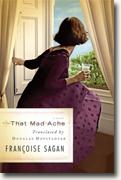 Poor Lucile. Torn between her older lover, Charles, who keeps her in a life of leisure and a cute convertible, and the young Antoine, a struggling publisher with whom she shares passion in his tiny flat, what is a flighty carefree woman of thirty to do?
"She adored Antoine but she cared for Charles; Antoine made her happy, but she at least did not make Charles unhappy. Cherishing both at once, she didn’t care enough about being of one mind to feel self-contempt for sharing herself between the two of them."Things are further complicated by Antoine’s relationship with the wealthy Diane, who is reluctant to give her young lover up. Charles, who has had his own share of women in the past, is nonchalant, expecting it to lead nowhere. He does love Lucile, although "he didn’t dare let her know just how much he loved her. Not that she would ever have taken any advantage of it, but just that it would have upset her, saddened her. It was already quite unexpected that she hadn’t yet left him. All he offered her, after all, was security, and he knew that that was the least of her concerns. Or at least maybe it was."


 Friday Finds is hosted by MizB at Should Be Reading.
 Slanted and Enchanted: The Evolution of Indie Culture by Kaya Oakes (via Largehearted Boy)
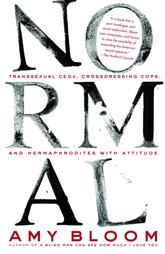 Normal by Amy Bloom (via Eva)

 When I realized that this travel memoir takes author Mary Morris to San Miguel, Mexico, I was a wee bit worried that it would be too similar to recent read, La Perdida (drugs, crime and scum of the earth star in this coming of age graphic novel). But while Morris meets her share of weird and unpleasant fellow expats in this small town, it is the friendship she develops with her neighbour, a local woman, Lupe, who is about the same age as Morris but whose path has taken a completely opposite route as she struggles to support her children, that blossoms and stands out.
"As a traveler I can achieve a kind of high, a somewhat altered state of consciousness. I think it must be what athletes feel. I am transported out of myself, into another dimension in time and space. While the journey is on buses and across land, I begin another journey inside my head, a journey of memory and sensation, of past merging with present, of time growing insignificant."However, Morris sometimes manages to put herself in silly situations, which made me throw up my hands and almost give up on her, and can be rather self-righteous. But I stuck with it, and it ended up being a pretty good read, even for this non-solo traveler.
Library Loot is a weekly event co-hosted by Eva and Marg that encourages bloggers to share the books they’ve checked out from the library. Reminiscent of Chocolat and Like Water for Chocolate, a gorgeously written novel about life, love, and the magic of food.Nature Writings: The Story of My Boyhood and Youth; My First Summer in the Sierra; The Mountains of California; Stickeen; Essays by John MuirThe School of Essential Ingredients follows the lives of eight students who gather in Lillian's Restaurant every Monday night for cooking class. It soon becomes clear, however, that each one seeks a recipe for something beyond the kitchen. Students include Claire, a young mother struggling with the demands of her family; Antonia, an Italian kitchen designer learning to adapt to life in America; and Tom, a widower mourning the loss of his wife to breast cancer. Chef Lillian, a woman whose connection with food is both soulful and exacting, helps them to create dishes whose flavor and techniques expand beyond the restaurant and into the secret corners of her students' lives. One by one the students are transformed by the aromas, flavors, and textures of Lillian's food, including a white-on-white cake that prompts wistful reflections on the sweet fragility of love and a peppery heirloom tomato sauce that seems to spark one romance but end another. Brought together by the power of food and companionship, the lives of the characters mingle and intertwine, united by the revealing nature of what can be created in the kitchen.
I'll leave you with the link to more Library Loot and one of my favourite pictures from our little roadtrip!In a lifetime of exploration, writing, and passionate political activism, John Muir made himself America's most eloquent spokesman for the mystery and majesty of the wilderness. A crucial figure in the creation of our national parks system and a visionary prophet of environmental awareness, he was also a master of natural description who evoked with unique power and intimacy the untrammeled landscapes of the American West. Nature Writings collects his most significant and best-loved works in a single volume. The Story of My Boyhood and Youth (1913) is Muir's account of growing up by the sea in Scotland, of coming to America with his family at age eleven, and of his early fascination with the natural world. My First Summer in the Sierra (1911) is his famous account of the spiritual awakening he experienced when, 1869, he first encountered the mountains and valleys of central California. The Mountains of California (1894) draws on half a lifetime of exploration of the high Sierra country to celebrate and evoke the region's lakes, forests, flowers, and animals in a masterpiece of observation and poetic description. Also included are the widely popular "Stickeen" (1909), Muir's affectionate story of an adventure with a dog in Alaska, and a rich selection of essays - including "Yosemite Glaciers", "God's First Temples", "Snow-Storm on Mount Shasta", "The American Forests", and the late appeal "Save the Redwoods" - highlighting various aspects of his career: his exploration of what became Yosemite and Yellowstone national parks and the Grand Canyon, his successful crusades to preserve the wilderness, his early walking tour to Florida, and the Alaska journey of 1879.
"I mean the Eyefull Tower is devine and it is much more educational than the London Tower, because you can not even see the London Tower if you happen to be two blocks away."Of course she really spends her time meeting more men and getting them to spend money on her. And she quickly learns the difference between American men and European men: "I really think that American gentlemen are the best after all, because kissing your hand may make you feel very very good but a diamond and safire bracelet lasts forever."
Library Loot is a weekly event co-hosted by Eva and Marg that encourages bloggers to share the books they’ve checked out from the library. Accomplished journalist Sam Weller met the Ray Bradbury while writing a cover story for the Chicago Tribune Magazine and spent hundreds of hours interviewing Bradbury, his editors, family members, and longtime friends. With unprecedented access to private archives, he uncovered never–before–published letters, documents, and photographs that help tell the story of this literary genius and his remarkable creative journey. The result is a richly textured, detailed biography that illuminates the origins and accomplishments of Bradbury's fascinating mind.Into the Beautiful North - Luis Alberto Urrea
Nineteen-year-old Nayeli works at a taco shop in her Mexican village and dreams about her father, who journeyed to the US to find work. Recently, it has dawned on her that he isn't the only man who has left town. In fact, there are almost no men in the village — they've all gone north. While watching The Magnificent Seven, Nayeli decides to go north herself and recruit seven men — her own Siete Magnificos — to repopulate her hometown and protect it from the bandidos who plan on taking it over.Uncle Tom's Cabin - Harriet Beecher StoweFilled with unforgettable characters and prose as radiant as the Sinaloan sun, Into the Beautiful North is the story of an irresistible young woman's quest to find herself on both sides of the fence.
Uncle Tom, Topsy, Sambo, Simon Legree, little Eva: their names are American bywords, and all of them are characters in Harriet Beecher Stowe's remarkable novel of the pre-Civil War South. Uncle Tom's Cabin was revolutionary in 1852 for its passionate indictment of slavery and for its presentation of Tom, "a man of humanity," as the first black hero in American fiction. Labeled racist and condescending by some contemporary critics, it remains a shocking, controversial, and powerful work — exposing the attitudes of white nineteenth-century society toward "the peculiar institution" and documenting, in heartrending detail, the tragic breakup of black Kentucky families "sold down the river." An immediate international sensation, Uncle Tom's Cabin sold 300,000 copies in the first year, was translated into thirty-seven languages, and has never gone out of print: its political impact was immense, its emotional influence immeasurable.Unaccustomed Earth - Jhumpa Lahiri
These eight stories by beloved and bestselling author Jhumpa Lahiri take us from Cambridge and Seattle to India and Thailand, as they explore the secrets at the heart of family life. Here they enter the worlds of sisters and brothers, fathers and mothers, daughters and sons, friends and lovers. Rich with the signature gifts that have established Jhumpa Lahiri as one of our most essential writers, Unaccustomed Earth exquisitely renders the most intricate workings of the heart and mind.See more Library Loot here.
 La Perdida starts out with Carla, an American in her early 20s, heading to Mexico to search for her Mexican roots (her estranged father is Mexican). She crashes with her rich ex-boyfriend, who socializes mostly with other expats, and ends up falling out with him. And meets some locals (mostly lowlifes), including wannabe DJ Oscar with no turntable, who becomes her boyfriend. But Carla is so determined to experience the real Mexico that she doesn't see the quicksand she is slowly sinking in until it reaches her eyeballs .


