Monday, July 13, 2009

Read: The Bradbury Chronicles by Sam Weller

Reading The Bradbury Chronicles sure made me want to go out and get my hands on every single one of Ray Bradbury's works, now that I've learnt how he was inspired to write them. At this point, I have read just a few of his books, such as Farenheit 451, The Golden Apples of the Sun and Martian Chronicles (two of which were only recently read). But his imagination is truly something. And now, having read The Bradbury Chronicles, I am in awe of Bradbury's determination, the way he went out to get what he wanted, from chasing Marlena Dietrich to get a photo (when he was a kid that is), to educating himself at the library after finishing high school. This biography makes this great writer, who had such a humble background, so much more human. But there seemed to be something missing from the book, especially with regards to his later years. A lot was hinted at, but never fully divulged.

However I must profess a fondness for Bradbury, especially his lifelong love for libraries. His design for his dream library includes a subbasement children's library accessible by a slide! He feels that modern libraries have lost their mystery and are impersonal. And that libraries should also have "shadowy areas in which the mind an body could wander and get lost."

My library doesn't quite have shadowy areas, but one of the reading corners has a splendid view of trees. So excuse me while I go find a copy of Dandelion Wine and indulge in more of Bradbury.

Sunday, July 12, 2009

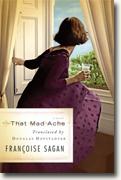
Read: That Mad Ache by Francoise Sagan and Douglas R Hofstadter

Poor Lucile. Torn between her older lover, Charles, who keeps her in a life of leisure and a cute convertible, and the young Antoine, a struggling publisher with whom she shares passion in his tiny flat, what is a flighty carefree woman of thirty to do?
"She adored Antoine but she cared for Charles; Antoine made her happy, but she at least did not make Charles unhappy. Cherishing both at once, she didn’t care enough about being of one mind to feel self-contempt for sharing herself between the two of them."
Things are further complicated by Antoine’s relationship with the wealthy Diane, who is reluctant to give her young lover up. Charles, who has had his own share of women in the past, is nonchalant, expecting it to lead nowhere. He does love Lucile, although "he didn’t dare let her know just how much he loved her. Not that she would ever have taken any advantage of it, but just that it would have upset her, saddened her. It was already quite unexpected that she hadn’t yet left him. All he offered her, after all, was security, and he knew that that was the least of her concerns. Or at least maybe it was."

Thus begins the lovers’ game of hide and seek, playing it coy at parties and sneaking off to Antoine’s small room several times a week. Inevitably, Antoine issues his ultimatum: him or Charles. The indecisive Lucile (“now she had a day and a half to make up her mind – and prendre une decision was among the most terrifying phrases in the entire French language to her”) stays with Charles for a bit longer, but realizes she wants Antoine: “Her love was there, solid, standing there like a wall separating her from the sun and from life’s comfort, even from the desire to live at all.” Of course, life with Antoine, having to take the Métro, having to – horrors! – work, that is hardly the life for Lucile. She is in love, but will she ever be happy?

That Mad Ache, set in 1960's high-society Paris, is a charming little read. It won’t quite tax one’s brain too much, but it allows one to reflect a little on love and relationships and, ultimately, happiness. Sagan constructs the relationships between the characters admirably well, and Lucile’s musings, especially after she is with Antoine, provides That Mad Ache a greater depth than it first seems to hold.

Translator Douglas Hofstadter appends a lengthy essay to the book, an attempt to “spur thoughtful people to reflect more deeply than perhaps they have on the subtle art of translation.” It is insightful and made this reader more aware of the role of a translator, and also explains his personal devotion to translating the book. His passion for the That Mad Ache (or La Chamade) as well as the art of translation is effusive, but the essay ought to have been edited better; it is broken up into far too many little sections which unfortunately have rather corny headers and is in the end quite a letdown.

Originally reviewed at Curled Up With A Good Book

Saturday, July 11, 2009

Sago Gula Melaka


Oh it's been so long since I've had Sago Gula Melaka. I'd never made it before and was surprised at how easy this dessert is. Loved it!

Friday, July 10, 2009

Friday Finds (10 July 2009)

Friday Finds is hosted by MizB at Should Be Reading.

Slanted and Enchanted: The Evolution of Indie Culture by Kaya Oakes (via Largehearted Boy)

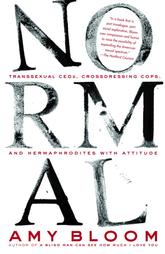
Normal by Amy Bloom (via Eva)

The Land That Never Was by David Sinclair (via The Guardian)


Thursday, July 09, 2009

Cloudy days

Are best taken with a hot beverage, in this case, apple tea from Turkey, served in this beautiful hand-painted tea cup and saucer (thanks to my mom, who brought them from Turkey to Singapore, and now to California).

Wednesday, July 08, 2009

Read: Nothing to declare: Memoirs of a Woman Traveling Alone by Mary Morris

When I realized that this travel memoir takes author Mary Morris to San Miguel, Mexico, I was a wee bit worried that it would be too similar to recent read, La Perdida (drugs, crime and scum of the earth star in this coming of age graphic novel). But while Morris meets her share of weird and unpleasant fellow expats in this small town, it is the friendship she develops with her neighbour, a local woman, Lupe, who is about the same age as Morris but whose path has taken a completely opposite route as she struggles to support her children, that blossoms and stands out.

Nothing To Declare
is not just a travel book but also an exploration of self as Morris sets up home in San Miguel, using it as a base from which she explores areas such as Honduras and Guatemala:
"As a traveler I can achieve a kind of high, a somewhat altered state of consciousness. I think it must be what athletes feel. I am transported out of myself, into another dimension in time and space. While the journey is on buses and across land, I begin another journey inside my head, a journey of memory and sensation, of past merging with present, of time growing insignificant."
However, Morris sometimes manages to put herself in silly situations, which made me throw up my hands and almost give up on her, and can be rather self-righteous. But I stuck with it, and it ended up being a pretty good read, even for this non-solo traveler.

Tuesday, July 07, 2009

Library Loot (July 7 2009)

Library Loot is a weekly event co-hosted by Eva and Marg that encourages bloggers to share the books they’ve checked out from the library.

Just two books this week as I've still some catching up to do from the previous library run.

The School of Essential Ingredients by Erica Bauermeister
Reminiscent of Chocolat and Like Water for Chocolate, a gorgeously written novel about life, love, and the magic of food.

The School of Essential Ingredients follows the lives of eight students who gather in Lillian's Restaurant every Monday night for cooking class. It soon becomes clear, however, that each one seeks a recipe for something beyond the kitchen. Students include Claire, a young mother struggling with the demands of her family; Antonia, an Italian kitchen designer learning to adapt to life in America; and Tom, a widower mourning the loss of his wife to breast cancer. Chef Lillian, a woman whose connection with food is both soulful and exacting, helps them to create dishes whose flavor and techniques expand beyond the restaurant and into the secret corners of her students' lives. One by one the students are transformed by the aromas, flavors, and textures of Lillian's food, including a white-on-white cake that prompts wistful reflections on the sweet fragility of love and a peppery heirloom tomato sauce that seems to spark one romance but end another. Brought together by the power of food and companionship, the lives of the characters mingle and intertwine, united by the revealing nature of what can be created in the kitchen.

Nature Writings: The Story of My Boyhood and Youth; My First Summer in the Sierra; The Mountains of California; Stickeen; Essays by John Muir
After a short one-day trip to Yosemite (it was too hot, too crowded and the management fires carried out by the park made everything, especially photos, too smoky), I decided that I'd like to (i) return in either spring or fall, and (ii) read something by John Muir. I reckon this is a good start.
In a lifetime of exploration, writing, and passionate political activism, John Muir made himself America's most eloquent spokesman for the mystery and majesty of the wilderness. A crucial figure in the creation of our national parks system and a visionary prophet of environmental awareness, he was also a master of natural description who evoked with unique power and intimacy the untrammeled landscapes of the American West. Nature Writings collects his most significant and best-loved works in a single volume. The Story of My Boyhood and Youth (1913) is Muir's account of growing up by the sea in Scotland, of coming to America with his family at age eleven, and of his early fascination with the natural world. My First Summer in the Sierra (1911) is his famous account of the spiritual awakening he experienced when, 1869, he first encountered the mountains and valleys of central California. The Mountains of California (1894) draws on half a lifetime of exploration of the high Sierra country to celebrate and evoke the region's lakes, forests, flowers, and animals in a masterpiece of observation and poetic description. Also included are the widely popular "Stickeen" (1909), Muir's affectionate story of an adventure with a dog in Alaska, and a rich selection of essays - including "Yosemite Glaciers", "God's First Temples", "Snow-Storm on Mount Shasta", "The American Forests", and the late appeal "Save the Redwoods" - highlighting various aspects of his career: his exploration of what became Yosemite and Yellowstone national parks and the Grand Canyon, his successful crusades to preserve the wilderness, his early walking tour to Florida, and the Alaska journey of 1879.
I'll leave you with the link to more Library Loot and one of my favourite pictures from our little roadtrip!

Monday, July 06, 2009

Read: Gentlemen Prefer Blondes by Anita Loos

Anita Loos has me quite tickled with this "illuminating diary of a professional lady". The lady in question is Lorelei Lee who lives in New York where her many gentlemen friends take her out to dine at the Ritz, emphasize to her that she has plenty of brains, and send her plenty of gifts. For example, an English writer sends her a set of books for her birthday "by a gentleman called Mr Conrad. They all seem to be about ocean travel although I have not had time to more than glance through them. I have always liked novels about ocean travel ever since I posed for Mr Christie for the front cover of a novel about ocean travel by McGrath because I always say that a girl never really looks as well as she does on board a steamship, or even a yacht".

And Lorelei gets to do plenty of posing on board when one of her gentlemen friends sends her off to Europe to get educated:
"I mean the Eyefull Tower is devine and it is much more educational than the London Tower, because you can not even see the London Tower if you happen to be two blocks away."
Of course she really spends her time meeting more men and getting them to spend money on her. And she quickly learns the difference between American men and European men: "I really think that American gentlemen are the best after all, because kissing your hand may make you feel very very good but a diamond and safire bracelet lasts forever."

Since it's all about beach reads this time of the year, I'd have to say recommend this for lazing around in the sun. It's fun and frivolous and entertaining.

Wednesday, July 01, 2009

Read in June 2009

Fiction (14)
Vagrants by Yiyun Li
Out Stealing Horses by Per Petterson
The Astonishing Life of Octavian Nothing Volume II: The Kingdom on the Waves by M.T. Anderson
Heat and Dust by Ruth Prawer Jhabvala
Goose Girl by Shannon Hale
Fingersmith by Sarah Waters
The Fall of the House of Usher by Edgar Allen Poe
Clear Light of Day by Anita Desai
A High Wind in Jamaica by Richard Hughes
Women in their beds by Gina Berriault
Excellent Women by Barbara Pym
Coraline by Neil Gaiman
The Engagement by Georges Simenon
Feathered Serpent by Xu Xiaobin

Non-fiction (5)
Nothing To Declare: Memoirs of a Woman Traveling Alone by Mary Morris
Bonk by Mary Roach
A Room of One's Own by Virginia Woolf
Day of Empire: How Hyperpowers Rise to Global Dominance - and Why They Fail by Amy Chua
The Sushi Economy: Globalization and the Making of a Modern Delicacy by Sasha Issenberg

Graphic Novels (4)
Hellboy: Darkness Calls by Mike Mignola
Maus II by Art Spiegelman
Sandman: Preludes and Nocturnes by Neil Gaiman
La Perdida by Jessica Abel

Cookbooks (3)
Barefoot Contessa Back to Basics by Ina Garten
Caprial's Soups & Sandwiches by Caprial Pence
Cradle of Flavor: Home Cooking from the Spice Islands of Indonesia, Singapore and Malaysia by James Oseland

Total: 26

Tuesday, June 30, 2009

Library Loot (30 June 2009)

Library Loot is a weekly event co-hosted by Eva and Marg that encourages bloggers to share the books they’ve checked out from the library.

With my parents' arrival tonight, I'm not too sure how much reading I can do in the two weeks that they're here. But I still hit the library anyway, and got some pretty good reads.

The Bradbury Chronicles - Sam Weller
And here's a very apt quote about from Bradbury in that recent NYT article:
“Libraries raised me,” Mr. Bradbury said. “I don’t believe in colleges and universities. I believe in libraries because most students don’t have any money. When I graduated from high school, it was during the Depression and we had no money. I couldn’t go to college, so I went to the library three days a week for 10 years.”
Accomplished journalist Sam Weller met the Ray Bradbury while writing a cover story for the Chicago Tribune Magazine and spent hundreds of hours interviewing Bradbury, his editors, family members, and longtime friends. With unprecedented access to private archives, he uncovered never–before–published letters, documents, and photographs that help tell the story of this literary genius and his remarkable creative journey. The result is a richly textured, detailed biography that illuminates the origins and accomplishments of Bradbury's fascinating mind.
Into the Beautiful North - Luis Alberto Urrea
Having loved The Hummingbird's Daughter, I am looking forward to this one.
Nineteen-year-old Nayeli works at a taco shop in her Mexican village and dreams about her father, who journeyed to the US to find work. Recently, it has dawned on her that he isn't the only man who has left town. In fact, there are almost no men in the village — they've all gone north. While watching The Magnificent Seven, Nayeli decides to go north herself and recruit seven men — her own Siete Magnificos — to repopulate her hometown and protect it from the bandidos who plan on taking it over.

Filled with unforgettable characters and prose as radiant as the Sinaloan sun, Into the Beautiful North is the story of an irresistible young woman's quest to find herself on both sides of the fence.

Uncle Tom's Cabin - Harriet Beecher Stowe
Uncle Tom, Topsy, Sambo, Simon Legree, little Eva: their names are American bywords, and all of them are characters in Harriet Beecher Stowe's remarkable novel of the pre-Civil War South. Uncle Tom's Cabin was revolutionary in 1852 for its passionate indictment of slavery and for its presentation of Tom, "a man of humanity," as the first black hero in American fiction. Labeled racist and condescending by some contemporary critics, it remains a shocking, controversial, and powerful work — exposing the attitudes of white nineteenth-century society toward "the peculiar institution" and documenting, in heartrending detail, the tragic breakup of black Kentucky families "sold down the river." An immediate international sensation, Uncle Tom's Cabin sold 300,000 copies in the first year, was translated into thirty-seven languages, and has never gone out of print: its political impact was immense, its emotional influence immeasurable.
Unaccustomed Earth - Jhumpa Lahiri
Another one that I've been waiting forever for. And today I found two copies.
These eight stories by beloved and bestselling author Jhumpa Lahiri take us from Cambridge and Seattle to India and Thailand, as they explore the secrets at the heart of family life. Here they enter the worlds of sisters and brothers, fathers and mothers, daughters and sons, friends and lovers. Rich with the signature gifts that have established Jhumpa Lahiri as one of our most essential writers, Unaccustomed Earth exquisitely renders the most intricate workings of the heart and mind.
See more Library Loot here.

Friday, June 26, 2009

La Perdida by Jessica Abel

La Perdida starts out with Carla, an American in her early 20s, heading to Mexico to search for her Mexican roots (her estranged father is Mexican). She crashes with her rich ex-boyfriend, who socializes mostly with other expats, and ends up falling out with him. And meets some locals (mostly lowlifes), including wannabe DJ Oscar with no turntable, who becomes her boyfriend. But Carla is so determined to experience the real Mexico that she doesn't see the quicksand she is slowly sinking in until it reaches her eyeballs .

It was hard to sympathize with Carla who was essentially walking around with blinders on. I wanted to shake her constantly, especially since there were so many red lights going off about her so-called friends. But I must say, it was a rather engrossing read, and I definitely enjoyed the expressive black and white drawings, which spoke volumes.

Thursday, June 25, 2009

Read: Coraline by Neil Gaiman


When it comes to the movie vs book fight, the book inevitably wins. Sometimes I am even hesitant to go see a movie when I loved reading the book. Recently though, I have been proved wrong, with Helene Hanff's 84 Charing Cross Road translating remarkably well to the screen.

In the case of Coraline, I saw the wonderful 3-D version earlier on in the year, and only managed to get hold of a copy of the book from the library last week. The movie was gorgeous and absolutely enchanting (although a little creepy). And likewise the book. Of course, I already had the images of the film in my mind when I was devouring it.

Wednesday, June 24, 2009

Read: Cradle of Flavor: Home Cooking from the Spice Islands of Indonesia, Malaysia, and Singapore by James Oseland

"What would this ang moh know about Southeast Asian cuisine?" Was the thought that immediately popped into my head when I saw James Oseland's Cradle of Flavor: Home Cooking from the Spice Islands of Indonesia, Malaysia, and Singapore. So I had to find out for myself.

And actually he knows a lot. And taught me a lot too. (Here I have to add that while I may be familiar with eating my country's food and some of it's neighbours', I don't know much about cooking it. My rendang for example, comes (ahem!) out of a packet). Plus Oseland has pretty stellar credentials. He's been editor-in-chief of Saveur since 2006 and teaches cooking classes at New York’s Institute for Culinary Education.

His love affair began when he was just a 19-year-old student in the 1980s. An Indonesian classmate invites him to stay with her family in Jakarta. He ended up traveling in Indonesia for a year. His travels have included stops in Malaysia and Singapore. While I despair at the way he makes the occasional sweeping statement about these three similar but oh so very different nations, he does provide an apt introduction to their cuisines and a translation of traditional ingredients into what's available in the western market. For me, that was the most useful section - the ingredients needed, their possible substitutes, and more importantly, how to store them, which I'm always a bit confused by. I have yet to attempt any of his recipes but they seem to be doable, and are of a nice variety (for instance, he has several recipes for sambal, including a lemongrass sambal from Bali, which sounds really yummy). The best cookbooks are the ones that not only make me hungry but also provide a personal account of the author's love for food. And Cradle of Flavor works well on both accounts.

Monday, June 22, 2009

Read: The Sushi Economy by Sasha Issenberg

Sushi as we know it is very much an invention of the late twentieth century, in particular the flows of money, power, people, and culture that define the era's interconnectedness.

Nearly every business across the world has been in some way affected by the currents of global capitalism, but in few places are the complex dynamics of globalization revealed as visibly as in the tuna's journey from the sea to the sushi bar.

In The Sushi Economy: Globalization and the Making of a Modern Delicacy, Sasha Issenberg traces the evolution of sushi. Before the 16th century, the rice used to ferment fish was usually scraped off and thrown away. But what we know as sushi today has its origins in 19th century Edo. Sushi was then produced by having cooked rice topped with a piece of fish sitfor 2 to 3 hours. An impatient hawker didn't want to wait and invented the process of molding the pieces on the spot and serving immediately. That became the trend in Edo and sushi was prepared with ingredients such as whitebait, tuna and eel. Wasabi was first used when serving fish heavy in toxins.

In the second section, Issenberg investigates the sushi economy, or more specifically, the tuna sushi economy. He profiles fishermen on the hunt for Boston bluefin; 'tuna cowboys', ranching the fish in Port Lincoln, Australia (and making millions). And then there's "The Raw and the Crooked", where Issenberg hits the trail looking for pirates, launderers and tuna's black market (which was rather boring). I was more interested in the stories of two restaurateurs, one famous (Nobu Matsuhisa), and the other not (Tyson Cole who owns a sushi restaurant in Austin, Texas).

The Sushi Economy is a decent enough read. As someone who adores sushi, I loved learning about the history of sushi. But I had to wonder about a book about the globalisation of sushi that writes about Singaporean diners feasting on "curry rolls and Hainanese chicken-rice rolls, often in halal sushi bars catering to the small nation's increasingly wealthy Malaysian Muslim population". Erm, what? No I don't think so. I only moved to the US from Singapore in January, but never have I come across a curry sushi roll or a Hainanese chicken rice roll. Further, Issenberg doesn't quite analyze globalization or economics as focus on character profiles, so the title is rather misleading.

Saturday, June 20, 2009

Nasi Lemak and Beef Rendang

When you can't get it, you have to try to make your own. Although not lemak enough.

Friday, June 19, 2009

Friday Finds (June 19 2009)

Friday Finds is hosted by MizB at Should Be Reading.


The Unit by Ninni Holmqvist (via The Dewey Divas and The Dudes)
February by Lisa Moore (via KevinfromCanada)
Journey Into Fear by Eric Ambler (via Asylum)
The English Stories by Cynthia Flood (via Biblioasis)

Thursday, June 18, 2009

Library Loot (18 June 2009)


Library Loot is a weekly event co-hosted by Eva and Marg that encourages bloggers to share the books they’ve checked out from the library. If you’d like to participate, just write up your post-feel free to steal the button-and link it using the Mr. Linky any time during the week. And of course check out what other participants are getting from their libraries!

I'm incredibly pleased with the variety I lugged back from the library today, which includes non-fiction, classics, graphic novels.

Coraline by Neil Gaiman
Yes the movie was seen ages ago, but I haven't managed to get hold of a copy of the book until today! Delighted!
When Coraline steps through a door to find another house strangely similar to her own (only better), things seem marvelous.

But there's another mother there, and another father, and they want her to stay and be their little girl. They want to change her and never let her go.

Coraline will have to fight with all her wits and courage if she is to save herself and return to her ordinary life.

Nothing To Declare: Memoirs of a Woman Traveling Alone by Mary Morris
I have never traveled alone, unlike the very brave DSD, but this sounds like such a great travelogue.
Traveling from the highland desert of northern Mexico to the steaming jungles of Honduras to the seashore of the Caribbean, Mary Morris confronts the realities of place, of poverty, of machismo, and of self.
Sandman: Preludes and Nocturnes by Neil Gaiman
Another score today at the library, which always had the other volumes of the Sandman series during my previous visits, just not the first one.
Preludes and Nocturnes is the first volume in the story of The Sandman.

Morpheus, the King of Dreams, has been held prisoner for 75 years by a wealthy madman. The world has suffered in his absence. Regaining his freedom, Morpheus must restore his deteriorated realm, The Dreaming, and recover his power, much of which resides in three stolen tools: his pouch, helmet, and ruby.

La Perdida by Jessica Abel
Of course I couldn't help browsing the shelf of graphic novels, and this caught my eye.
From the Harvey and Lulu award–winning creator of Artbabe comes this riveting story of a young woman’s misadventures in Mexico City. Carla, an American estranged from her Mexican father, heads to Mexico City to “find herself.” She crashes with a former fling, Harry, who has been drinking his way through the capital in the great tradition of his heroes, William S. Burroughs and Jack Kerouac. Harry is good—humored about Carla’s reappearance on his doorstep—until he realizes that Carla, who spends her days soaking in the city, exploring Frida Kahlo’s house, and learning Spanish, has no intention of leaving.

When Harry and Carla’s relationship of mutual tolerance reaches its inevitable end, she rejects his world of Anglo expats for her own set of friends: pretty-boy Oscar, who sells pot and dreams of being a DJ, and charismatic Memo, a left-wing, pseudo–intellectual ladies’ man. Determined to experience the real Mexico, Carla turns a blind eye to her new friends’ inconsistencies. But then she catches the eye of a drug don, el Gordo, and from that moment on her life gets a lot more complicated, and she is forced to confront the irreparable consequences of her willful innocence.

Jessica Abel’s evocative black–and–white drawings and creative mix of English and Spanish bring Mexico City’s past and present to life, unfurling Carla’s dark history against the legacies of Burroughs and Kahlo. A story about the youthful desire to live an authentic life and the consequences of trusting easy answers, La Perdida–at once grounded in the particulars of life in Mexico and resonantly universal–is a story about finding oneself by getting lost.

Gentlemen Prefer Blondes by Anita Loos
The delirious 1925 Jazz-Age classic that no less an authority than Edith Wharton called "the great American novel." If any American fictional character of the twentieth century seems likely to be immortal, it is Lorelei Lee of Little Rock, Arkansas, the not-so-dumb blonde who knew that diamonds are a girl's best friend. Outrageous, charming, and unforgettable, she's been portrayed on stage and screen by Carol Channing and Marilyn Monroe and has become the archetype of the footloose, good-hearted gold digger, with an insatiable appetite for orchids, champagne, and precious stones. Here are her "diaries," created by Anita Loos in the Roaring Twenties, as Lorelei and her friend Dorothy barrel across Europe meeting everyone from the Prince of Wales to "Doctor Froyd" — and then back home again to marry a Main Line millionaire and become a movie star. In this delightfully droll and witty book, Lorelei Lee's wild antics, unique outlook, and imaginative way with language shine.
The Engagement by Georges Simenon
On the outskirts of Paris, a prostitute is found murdered in a vacant lot. In a seedy apartment house nearby lives pasty, fat Mr. Hire. Mr. Hire, who earns his living through a petty postal scam, is a convicted pornographer, a peeping Tom, and, once a week, the unlikely star of a Parisian bowling club, where people think he works for the police. He is a faceless man of regular habits who keeps to himself and gives his neighbors the creeps. After the murder, Mr. Hire's concierge points a finger at him: he was out late the night of the crime. The police have the suspect under 24-hour surveillance. They are only waiting for him to make the inevitable mistake and give himself away. Except that creepy Mr. Hire is in fact an innocent man, whose only mistake is to have fallen head-over-heels in love with the wrong girl. One of the most chilling and compassionate of Simenon's extraordinary psychological novels, The Engagement explores the mystery of a blameless heart in a compromised soul.
A Fine Balance by Rohinton Mistry
With a compassionate realism and narrative sweep that recall the work of Charles Dickens, this magnificent novel captures all the cruelty and corruption, dignity and heroism, of India. The time is 1975. The place is an unnamed city by the sea. The government has just declared a State of Emergency, in whose upheavals four strangers--a spirited widow, a young student uprooted from his idyllic hill station, and two tailors who have fled the caste violence of their native village--will be thrust together, forced to share one cramped apartment and an uncertain future. As the characters move from distrust to friendship and from friendship to love, A Fine Balance creates an enduring panorama of the human spirit in an inhuman state.

Frankenstein by Mary Shelley
I rewatched Young Frankenstein last week, and then thought that it's high time I read the book.
Mary Shelley began writing Frankenstein when she was only eighteen. At once a Gothic thriller, a passionate romance, and a cautionary tale about the dangers of science, Frankenstein tells the story of committed science student Victor Frankenstein. Obsessed with discovering the cause of generation and life and bestowing animation upon lifeless matter, Frankenstein assembles a human being from stolen body parts but; upon bringing it to life, he recoils in horror at the creature's hideousness. Tormented by isolation and loneliness, the once-innocent creature turnsto evil and unleashes a campaign of murderous revenge against his creator, Frankenstein.
More library loot here.

Summer Salad

Roll out those lazy, hazy, crazy days of summer.
With a strawberry and spinach salad.

Wednesday, June 17, 2009

Arthur and George by Julian Barnes

Have you ever read a book that, although well written, you just can't possibly read?

That book for me is Julian Barnes' Arthur and George. It started out really well, as the boys grow up in the 19th century - in Edinburgh and Staffordshire respectively. Arthur eventually becomes that very famous Arthur and his very famous detective creation. George, now a solicitor, unfortunately gets some notoriety of his own as he is accused of a horrible crime.

And that is the part that got to me. As I read the accusations last night, I was angry, I was worked up. I had to stop reading otherwise I would never be able to sleep. I flipped through the book, wondering if all that would ever end. And page after page after page... until I reached the part where Arthur and George meet. However, by that time, I wasn't sure if I could read anymore.

Arthur and George is a great book, don't get me wrong. It is a very masterful writer who can have a reader so sucked into the book that she feels emotionally attached to the characters (and as a result, incredibly agitated by said accusations). But for my sanity and my ability to sleep at night, I am putting this one to rest, only half-read.

Tuesday, June 16, 2009

Day of Empire by Amy Chua

In a little over two centuries, America has grown from a regional power to a superpower, and to what is today called a hyperpower. But can America retain its position as the world’s dominant power, or has it already begun to decline?

Historians have debated the rise and fall of empires for centuries. To date, however, no one has studied the far rarer phenomenon of hyperpowers—those few societies that amassed such extraordinary military and economic might that they essentially dominated the world.

Now, in this sweeping history of globally dominant empires, bestselling author Amy Chua explains how hyperpowers rise and why they fall. In a series of brilliantly focused chapters, Chua examines history’s hyperpowers—Persia, Rome, Tang China, the Mongols, the Dutch, the British, and the United States—and reveals the reasons behind their success, as well as the roots of their ultimate demise.
(etc)

Chua first qualifies what she means by a "world-dominant power". "Its power clearly surpasses that of all it's known contemporaneous rivals; it is not clearly inferior in economic or military strength to any other power on the planet, known to it or not; and it projects its
power over so immense an area of the globe and over so immense a population that it breaks the bounds of mere local or even regional preeminence." The book emphasizes tolerance, that is, allowing different peoples to "live, work and prosper in your society - even if only for
instrumental or strategic reasons." she argues that tolerance is "a necessary condition for world dominance".

Day of Empire was the perfect book for me. Having only a scanty knowledge of world history (in school we focused on the histories of Singapore and Thailand), I was looking for something that would give me a concise rundown (well to the extent of the limits of her thesis) of the empires of the world - Rome, China, Britain etc. Chua's argument is coherent and is easy to understand, as is her writing. Simply put, I learnt quite a bit from this book, and would highly recommend it!